

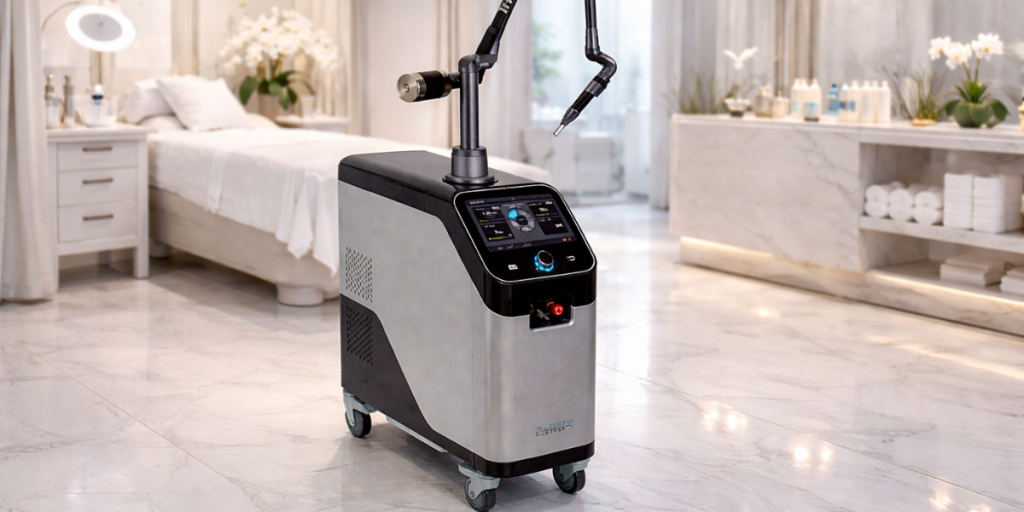
How Many Sessions Does a Tattoo Removal Machine Laser Take? A Realistic Guide for Advanced Clinics
Tattoo removal today is no longer a trial-and-error procedure. With the arrival of high-performance Tattoo Removal Machine Laser platforms, dermatology clinics can deliver predictable, safe, and aesthetically refined outcomes. However, one question still dominates every consultation: How many sessions will it take?
The honest answer—backed by clinical data and real-world practice—is that most tattoos require 6 to 12 sessions, while advanced picosecond systems may reduce that number for suitable cases. For premium clinics, the key is not promising fewer sessions—it is explaining why the number varies and how technology improves efficiency.
The Technology That Determines Results
A modern laser tattoo removal machine works through selective photothermolysis. Ultra-short, high-energy pulses target tattoo pigment without damaging surrounding tissue. The ink breaks into microscopic particles, which the body gradually clears through the lymphatic system.
High-end systems used in luxury dermatology settings typically include:
- Multiple wavelengths (1064 nm, 532 nm, and 755 nm) to treat multicolored tattoos
- Adjustable fluence for customized energy delivery
- Variable spot sizes for precision and depth control
- Advanced epidermal cooling for patient comfort and safety
- Nanosecond or picosecond pulse durations for efficient pigment fragmentation
These specifications directly influence the number of sessions required and the overall patient experience.
What Is the Realistic Session Range?
For most patients treated with a medical-grade Tattoo Removal Machine Laser, the expected course is:
- 6–8 sessions for older, black-ink tattoos
- 8–12 sessions for professional, dense, or multicolored tattoos
- 4–8 sessions in select cases using high-powered picosecond technology
Sessions are typically spaced 6–8 weeks apart to allow complete immune clearance of fragmented pigment. Shortening this interval does not speed up results and can increase the risk of complications.
Why Some Tattoos Need More Sessions
Ink Color and Chemical Composition
Black ink absorbs laser energy most efficiently, making it the easiest to remove. Green, turquoise, and yellow pigments are more resistant and require additional sessions and multiple wavelengths.
Tattoo Depth and Density
Professional tattoos are placed deeper and contain more pigment, which increases treatment time compared to amateur tattoos.
Skin Type
In patients with higher melanin levels, conservative energy settings are used to prevent hyperpigmentation, which may extend the treatment course.
Tattoo Age
Older tattoos often fade faster because the body has already begun breaking down the pigment.
Body Location
Areas with better circulation—such as the upper torso—respond faster than distal areas like the ankles or fingers.
Clinical Endpoints After Each Session
A well-performed session with a high-spec Tattoo Removal Machine Laser typically shows:
- Immediate whitening or “frosting”
- Mild redness and swelling for 24–48 hours
- Progressive fading over the next 4–6 weeks
Complete clearance is cumulative. Each session builds on the previous one.
Q-Switched vs Picosecond: Efficiency Matters
Q-Switched Nd:YAG Systems
These remain a dependable standard for black, blue, and red pigments and are widely used in high-volume practices.
Picosecond Platforms
Picosecond technology delivers energy in trillionths of a second, creating a stronger photoacoustic effect that breaks ink into finer particles. This often leads to:
- Faster fading
- Fewer sessions
- Better results on resistant colors
- Reduced thermal damage
For premium clinics, this translates into shorter treatment plans and higher patient satisfaction.
A Strategic Investment for Luxury Dermatology Practices
For clinics positioning themselves at the top tier of aesthetic medicine, device capability is part of the brand. Patients seeking tattoo removal in luxury settings expect:
- Faster visible results
- Minimal downtime
- Enhanced comfort
- Safety across all skin types
- Fewer total visits
Advanced systems make it possible to meet these expectations while improving chair-time efficiency and revenue per hour.
Technology Spotlight: IRIS Pico Laser for High-Performance Clinics
Clinics aiming to deliver superior tattoo removal outcomes should consider the IRIS Pico Laser, a next-generation Tattoo Removal Machine Laser designed for precision, speed, and versatility. Its ultra-short picosecond pulse duration produces a powerful photoacoustic effect that shatters pigment into extremely fine particles, allowing the body to clear ink more efficiently than traditional nanosecond systems. With multi-wavelength functionality, high peak power, and adjustable spot sizes, it enables effective treatment of multicolored and stubborn tattoos while maintaining excellent epidermal protection. The integrated cooling mechanism enhances patient comfort—an essential factor in luxury clinical environments—and reduces post-treatment inflammation and downtime. For advanced dermatology practices focused on reducing session counts, improving clinical outcomes, and elevating patient experience, this platform represents a technologically and commercially sound investment.
Setting the Right Patient Expectations
Transparency is essential for long-term satisfaction. Patients should be informed that:
- Tattoo removal is a staged process
- Complete clearance depends on multiple biological factors
- Some faint shadowing may remain in rare cases
- Strict sun protection and aftercare improve results
Providing a session range rather than a fixed number builds trust and reduces unrealistic expectations.
Business and Clinical Advantages of Fewer Sessions
When a high-end laser tattoo removal machine reduces the total number of treatments, clinics benefit from:
- Increased patient throughput
- Stronger before-and-after portfolios
- Higher perceived value per session
- Improved patient referrals
- Premium pricing justification
Efficiency and outcomes together strengthen a clinic’s competitive positioning.
Final Thoughts
A realistic expectation for tattoo removal is 6 to 12 sessions, with fewer treatments possible using advanced picosecond Tattoo Removal Machine Laser systems. The exact number depends on ink color, depth, skin type, and device capability.
For luxury and advanced dermatology clinics, success lies in combining high-spec technology with structured treatment protocols and honest patient education. When science, technology, and clinical strategy align, tattoo removal becomes not just effective—but a signature service that reflects the highest standard of aesthetic care.
Upgrade Your Clinic with Advanced Tattoo Removal Technology
Deliver faster results, fewer sessions, and superior patient comfort with a next-generation Tattoo Removal Machine Laser. Position your practice as a leader in premium dermatology—book a demo of the IRIS Pico Laser today.


 2025 All Rights Reserved, Pyramid Healthcare.