

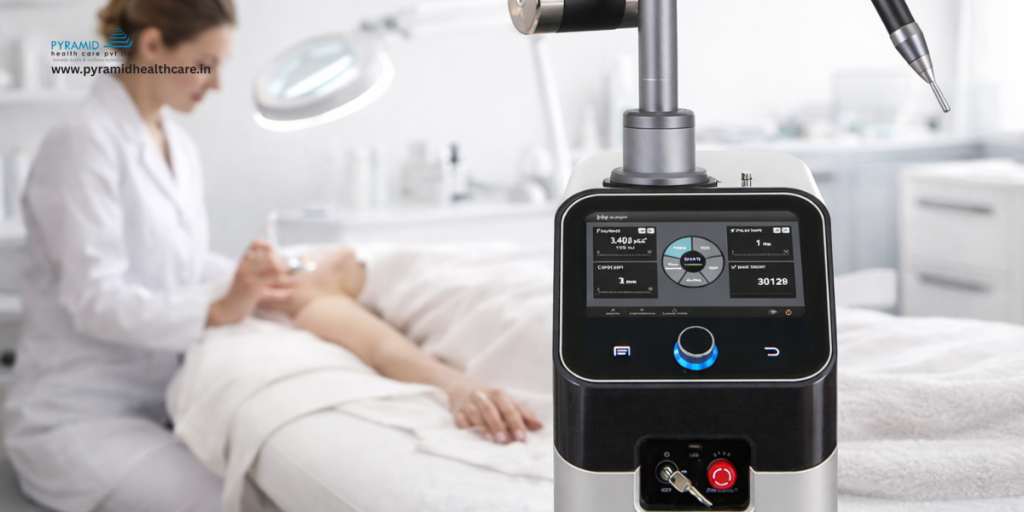
Q-Switched Laser Tattoo Removal Equipment Prices in India
A Practical, Technical Buying Guide for Advanced Dermatology & Luxury Aesthetic Clinics
The demand for tattoo removal in India (Tattoo Removal Equipment Prices) has evolved far beyond small cosmetic setups. Today’s patients expect faster clearance, minimal downtime, and safe outcomes for darker skin types. For dermatologists and premium aesthetic clinics, a Q-Switched laser is not just another device—it is a core treatment platform that supports tattoo removal, laser toning, carbon peel, and dermal pigmentation therapy.
Buying the right system requires more than comparing price tags. Energy stability, pulse characteristics, cooling architecture, and long-term maintenance costs ultimately decide whether a machine becomes a profit centre or a recurring liability. This guide explains the Indian price landscape, technical benchmarks, and operational economics in a clear, clinical context.
The Indian Market: What Different Price Segments Actually Offer
In India, Q-Switched systems fall into three broad categories.
Entry-level machines (₹60,000 – ₹1.2 lakh) are typically portable units with air cooling and limited spot sizes. While they appear attractive for startups, their energy output is often inconsistent, making them less reliable for dense professional tattoos or multi-colour ink. These systems are best suited for very low patient volume and carry a higher risk of uneven pigment clearance.
Mid-range dermatology platforms (₹1.5 lakh – ₹4 lakh) represent the most searched and most practical category. They offer dual wavelengths (1064 nm and 532 nm), multiple spot sizes, and water-assisted cooling. For clinics performing tattoo removal alongside laser toning and carbon peel, this segment delivers a workable balance between cost and performance. Most growing aesthetic practices in India operate successfully in this range.
Premium nanosecond and picosecond systems (₹7 lakh – ₹18 lakh and above) are designed for high-throughput dermatology centres. These machines provide superior pulse stability, faster ink fragmentation, and fewer treatment sessions—especially for resistant or layered tattoos. They also support advanced pigmentation protocols, allowing clinics to position themselves in the luxury segment with higher per-session pricing.
How Q-Switched Technology Works in Real Clinical Conditions
Q-Switched lasers produce extremely short nanosecond pulses with high peak power. Instead of heating the tissue, they create a photoacoustic shockwave that fractures ink particles while sparing surrounding skin.
For Indian skin types, two wavelengths are essential:
- 1064 nm for deeper penetration and safer treatment of black and blue inks
- 532 nm for superficial pigments such as red, orange, and some browns
Optional dye handpieces extend the capability to green and sky-blue inks, which is important for professional multi-colour tattoos.
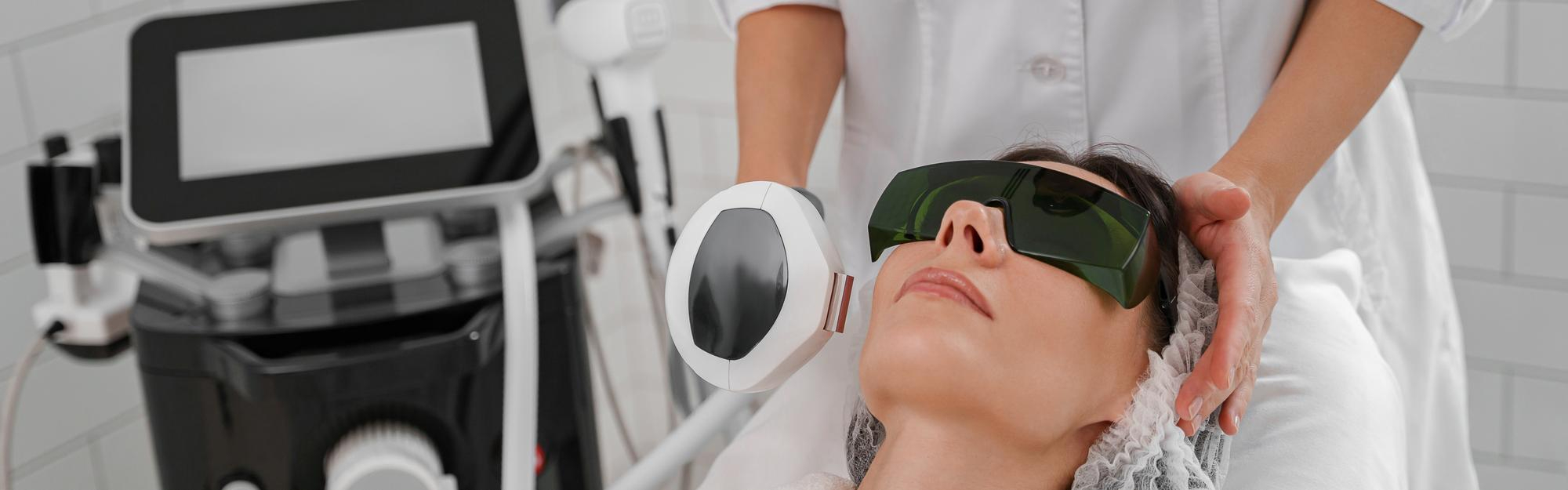
In daily practice, this same platform is used for laser toning and carbon peel, which is why many clinics now treat it as an Advanced Facial Laser Machine rather than a single-indication device.
Technical Specifications That Separate Clinical Devices from Cosmetic Units
A serious dermatology system should meet specific benchmarks.
Pulse duration determines how effectively the ink shatters. Nanosecond systems are the current standard, while picosecond devices deliver stronger photoacoustic impact with less thermal diffusion.
Fluence range should realistically reach at least 1–10 J/cm² with calibrated output. Display values without verification are not reliable.
Spot size flexibility from 2 mm to 10 mm allows both precision work and faster coverage of large tattoos.
Repetition rate of 5–10 Hz improves treatment speed and patient throughput, which directly affects revenue.
Cooling design is often overlooked. Closed-loop water and air cooling maintains energy stability during long sessions and prevent overheating in high-volume clinics.
Maintenance Economics: The Hidden Cost of Ownership
Many buyers focus on purchase price but ignore annual operating costs. The flashlamp is the most frequently replaced component, typically every 6–12 months depending on usage. Dye handpiece crystals, cooling system servicing, and periodic energy calibration add to the yearly expense.
Low-cost machines often have cheaper upfront pricing but higher downtime and inconsistent performance. In contrast, well-engineered systems maintain energy stability over longer periods, reducing the frequency of consumable replacements and protecting clinic schedules.
From a financial perspective, reliability is more valuable than the lowest initial cost.
From Tattoo Removal to Revenue Platform
Clinics that generate the highest return do not use their Q-Switched device only for tattoo removal (Tattoo Removal Equipment Prices). They integrate:
- Laser toning for melasma and post-inflammatory hyperpigmentation
- Carbon peel for oily skin, acne control, and pore reduction
- Dermal pigmentation treatments, such as the nevus of Ota
This transforms the machine into a full Facial Laser Machine that produces recurring monthly treatments rather than one-time procedures. The shift to multi-indication protocols is what defines Advanced Facial Laser Machine Technologies in modern practice.
Supplier Support: A Critical but Underrated Factor
In India, service infrastructure varies significantly between suppliers. Premium buyers evaluate:
- On-site clinical training tailored to Indian skin
- Availability of spare parts within the country
- Documented response time for service calls
- Calibration and safety certification
A machine without reliable after-sales support can disrupt clinic operations far more than its purchase price suggests.
A Practical Option for Advanced Clinics: The IRIS Q-Switched Platform
For dermatology centres that require stable clinical output without immediately moving into the highest price bracket for picosecond lasers, the IRIS system from Pyramid Healthcare offers a balanced, practice-oriented solution. It delivers dual wavelengths with calibrated fluence control designed for safe use across darker skin types, along with a high-efficiency cooling architecture that supports continuous operation during full-day treatment schedules. The ergonomically designed handpiece improves precision for large tattoos while maintaining uniform beam delivery for laser toning and carbon peel protocols. In day-to-day clinical workflow, this allows the device to function as a true Advanced Facial Laser Machine, enabling clinics to build predictable, recurring revenue from pigmentation therapy and rejuvenation treatments alongside tattoo removal. With structured training and local technical support, it provides the operational reliability that premium clinics require.
ROI Strategy for Luxury Dermatology Practices
High-end clinics justify advanced systems through structured treatment models. Tattoo removal is priced based on size and ink density, while carbon peel and laser toning are offered as packages or memberships. This approach increases patient retention and improves equipment utilisation.
When positioned correctly, a Q-Switched platform becomes one of the highest-yield devices in an aesthetic practice.
Final Thoughts
The Indian market offers a wide range of Q-Switched machines, but clinical performance, service reliability, and multi-indication capability are what determine long-term success.
For modern dermatology practices, the goal is not simply to remove tattoos. It is to deploy a versatile, high-precision Facial Laser Machine that supports pigmentation therapy, skin rejuvenation, and carbon peel treatments under a single platform. Clinics that invest in stable technology and position it within the framework of Advanced Facial Laser Machine Technologies achieve stronger patient outcomes, higher treatment value, and faster return on investment.

 2025 All Rights Reserved, Pyramid Healthcare.