

Best Facial Hair Removal Machine for Female Skin – A Sensitive-Skin & PCOS-Friendly Guide for Indian Women
Facial hair removal is not a one-size-fits-all concern—especially for women dealing with PCOS, reactive skin, and pigmentation issues. What works for someone with normal skin can leave another person with redness, bumps, or a persistent upper-lip shadow. That’s why the search for the best facial hair removal machine for female users today is less about convenience and more about long-term skin health.
If you’re tired of threading burns, waxing-induced dark patches, or daily shaving, it’s time to understand why modern laser technology is becoming the preferred option for Indian skin.
Why Sensitive Skin Needs a Different Approach
Indian skin has higher melanin content, which makes it:
- More prone to post-inflammatory hyperpigmentation (PIH)
- More reactive to heat and friction
- Slower to recover from repeated trauma
For women with PCOS, frequent hair removal becomes a cycle—remove hair → inflammation → pigmentation → faster visible regrowth → repeat. Traditional methods treat the symptom (hair), but not the source (the follicle).
This is where a true facial hair removal machine for female skin should do more than cut hair—it should reduce growth without damaging the skin barrier.
Surface Removal vs. Follicle Reduction
Let’s simplify:
Surface methods (trimmers, razors, dermaplaning)
- Quick and painless
- Safe for maintenance
- Hair grows back within days
- No reduction in thickness
Follicle-targeting methods (laser)
- Slower initial process
- Long-term reduction in density and thickness
- Less need for frequent removal
- Lower risk of pigmentation when done correctly
For PCOS-related facial hair, dermatologists consistently recommend laser hair reduction because hormonal hair tends to be thicker and faster growing.
What Makes a Laser the Best Facial Hair Removal Machine for Female Users?
A laser suitable for Indian facial skin must have:
✔ Multiple wavelengths for fine and coarse hair
✔ Strong cooling to prevent burns and redness
✔ Customisable energy levels
✔ Safe performance on medium to deeper skin tones
✔ Precision for small facial areas like the upper lip and chin
Single-technology devices often struggle with hormonal hair. Multi-wavelength diode systems perform better because they can adapt to different hair depths and skin types.
Why Leolase Stands Out for Facial Hair Reduction
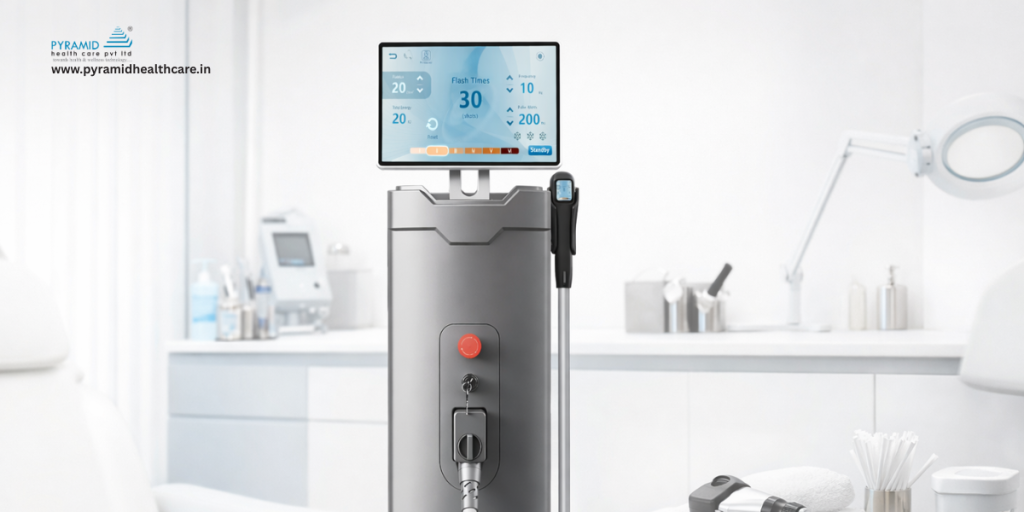
For women looking beyond temporary trimming, Leolase offers a clinic-grade solution designed for effective yet skin-safe facial hair reduction.
Its triple-wavelength diode technology (755nm, 808nm, and 1064nm) allows practitioners to treat:
- Fine upper-lip hair
- Coarse chin hair from PCOS
- Sideburns and jawline growth
The longer wavelength (1064nm) penetrates deeper with lower melanin interaction, which is particularly important for preventing pigmentation in darker Indian skin tones. This makes it suitable for women who previously avoided laser due to fear of dark spots.
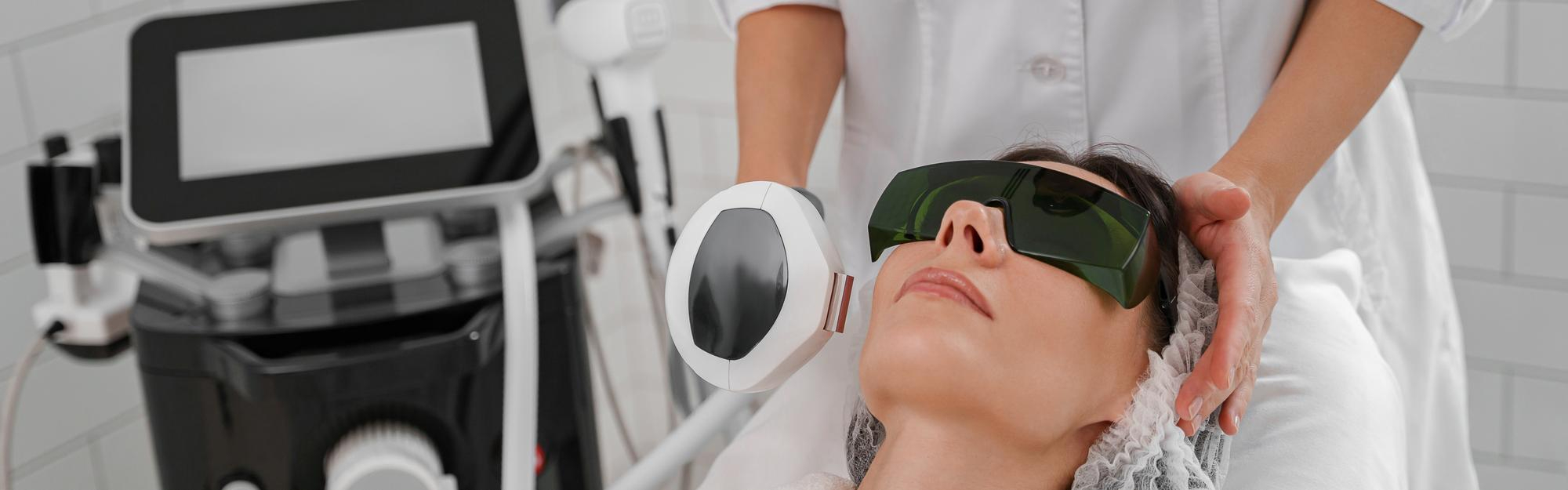
Another defining feature is its advanced sapphire contact cooling, which keeps the skin surface cold throughout the procedure. For sensitive skin, this translates to:
- Minimal redness
- Reduced burning sensation
- Lower inflammation (the main trigger for PIH)
Instead of repeatedly pulling hair from the root, Leolase targets the follicle during its growth phase, leading to gradual thinning, slower regrowth, and fewer visible hairs over time. For PCOS patients, this means less daily maintenance and fewer skin flare-ups.
Because settings can be customised based on skin tone, hair thickness, and treatment area, it is also safe for delicate facial zones that typically react badly to waxing or epilation.
Realistic Expectations for PCOS Facial Hair
A laser is not an overnight fix, but it changes the pattern of growth.
Typical results:
- Hair becomes finer and lighter
- Regrowth slows significantly
- Shaving or trimming between sessions becomes minimal
- Skin texture improves due to reduced ingrowns
Most women need 6–8 sessions, followed by occasional maintenance. PCOS may require periodic touch-ups, but the overall density is dramatically lower.
Why Laser Is Better Than Trimmers for PCOS Facial Hair
| Method | Result | Skin Impact | PCOS Suitability |
|---|---|---|---|
| Trimmer | Surface removal | Safe but frequent | Maintenance only |
| Wax/Thread | Root removal | High pigmentation risk | Not ideal |
| Home IPL | Mild reduction | Slow results | Limited for coarse hair |
| Diode Laser (Leolase) | Follicle targeting | Low irritation with cooling | Best long-term option |
Pigmentation Prevention After Facial Hair Removal
Whether you choose laser or trimming, aftercare is critical:
- Always treat clean, dry skin
- Avoid active acne areas
- Use calming ingredients (aloe, panthenol, niacinamide)
- Apply broad-spectrum sunscreen daily
- Avoid scrubs or activities for 48 hours post-treatment
Inflammation—not the hair removal itself—is the main cause of darkening.
Who Should Choose a Laser Facial Hair Removal Machine?
Leolase is especially suitable for:
✔ Women with PCOS and thick chin or jawline hair
✔ Sensitive skin that reacts to waxing or threading
✔ Recurrent upper-lip shadow or pigmentation
✔ Ingrown hair and bumps
✔ Those seeking long-term reduction rather than weekly removal
If your goal is less hair, fewer sessions, and calmer skin, follicle-targeting technology is the more sustainable path.
Final Verdict: Best Facial Hair Removal Machine for Female Skin
For quick touch-ups, a gentle trimmer is useful. But it doesn’t solve the underlying issue.
If you want:
- Long-term hair reduction
- Lower pigmentation risk
- PCOS-friendly results
- Smoother skin with fewer ingrowns
then a multi-wavelength diode laser system like Leolase is one of the most effective and skin-conscious solutions available today.
It shifts the focus from constant removal to lasting reduction, which is exactly what sensitive Indian skin needs.
FAQs
Is laser safe for the upper lip and chin?
Yes, when performed with appropriate settings and cooling designed for facial areas.
Will it completely stop PCOS hair growth?
Hormonal hair may need maintenance sessions, but density and thickness reduce significantly.
Does laser cause pigmentation?
Modern multi-wavelength diode lasers with proper cooling are designed to minimise this risk.

 2025 All Rights Reserved, Pyramid Healthcare.