

What Determines Tattoo Laser Machine Price? A Practical Buyer’s Guide for Indian Aesthetic Clinics
Adding a Tattoo Laser Machine to your clinic is more than a technology upgrade—it is a business decision that affects treatment outcomes, patient trust, and long-term profitability. In India, the Tattoo Laser Machine Price can vary dramatically, from entry-level systems suited for small practices to advanced platforms designed for high-end dermatology centres.
So what actually drives this price difference? The answer lies in five core factors: wavelength capability, laser technology (Q-switched vs picosecond), brand and build quality, warranty structure, and after-sales support. Understanding these elements helps you choose a system that fits both your clinical goals and your revenue model.
1. Wavelength: The Science Behind Versatility
Not all tattoos respond the same way to laser energy. Ink colour, depth, and skin type determine which wavelength is required for effective removal.
A standard Tattoo Laser Machine typically offers:
- 1064 nm – Best for black and dark blue inks, deeper penetration, safer for Indian skin (Fitzpatrick IV–V)
- 532 nm – Targets red, orange, and superficial pigments
- 755 nm (optional in advanced systems) – Useful for green and sky-blue inks
Machines with multiple wavelengths are more expensive because they allow you to treat a wider range of tattoo colours and also perform pigmentation procedures. For Indian clinics, this versatility is important—one device can generate revenue from tattoo removal, carbon facials, and benign pigment treatments.
In simple terms: more wavelengths = higher investment, but broader earning potential.
2. Q-Switched vs Picosecond: Technology Drives Pricing
The biggest price gap comes from pulse duration technology.
Q-Switched Lasers (Nanosecond Technology)
Q-switched Nd:YAG systems remain the backbone of tattoo removal in India. They deliver energy in nanoseconds, which is sufficient for most black and dark ink tattoos.
Why clinics choose them:
- Affordable entry point
- Reliable for common tattoo colours
- Multi-indication use (carbon peel, pigmentation)
- Lower maintenance cost
They are ideal for clinics in Tier 2 and Tier 3 cities or practices that prioritise high patient volume.
Picosecond Lasers
Picosecond systems fire energy in trillionths of a second, creating a stronger photoacoustic effect that breaks ink into finer particles.
Clinical advantages:
- Faster clearance in fewer sessions
- Better response for resistant colours
- Reduced risk of thermal damage
- Premium treatment positioning
However, the Tattoo Laser Machine Price for picosecond platforms is significantly higher. These systems make sense for metro clinics that can charge premium per-session fees and attract complex tattoo cases.
3. Energy Output and Spot Size: Speed Equals Profitability
Two technical specifications directly influence both performance and price:
Peak Energy (mJ)
Higher energy allows better ink fragmentation, especially for dense or professional tattoos. Machines with stable high energy cost more but reduce the number of sessions required—improving patient satisfaction and clinic reputation.
Spot Size Options
Larger spot sizes cover more area per pulse, which:
- Reduces treatment time
- Improves patient throughput
- Increases daily revenue capacity
Clinics handling large tattoos benefit from investing in higher-energy systems despite the higher upfront Tattoo Laser Machine Price.
4. Brand, Engineering, and Component Quality
Two machines may look similar on the outside but perform very differently internally. Beam stability, cooling systems, power supply design, and optical components determine:
- Treatment consistency
- Handpiece lifespan
- Risk of downtime
Established brands invest in clinical testing and safety features, which increases cost but ensures predictable results. Budget machines may reduce initial investment, but often lead to higher service frequency and consumable replacement.
In a treatment category where results directly affect patient referrals, performance consistency is a revenue driver.
5. Warranty: The Hidden Cost Controller
Warranty terms can significantly change the real cost of ownership.
A comprehensive package should include:
- System warranty (at least 1–2 years)
- Coverage for laser cavity or flashlamp
- Clear replacement cost after warranty
Low-priced machines often exclude key components from warranty, which increases long-term expenditure. When comparing the Tattoo Laser Machine Price, always calculate the cost over 3–5 years, not just the purchase value.
6. After-Sales Support: Critical for Indian Clinics
This is where many buying decisions succeed—or fail.
A machine without reliable local service can cause:
- Appointment cancellations
- Revenue loss
- Patient dissatisfaction
Strong after-sales support should include:
- On-site installation and hands-on training
- Quick response time for service calls
- Ready availability of spare parts in India
- Clinical protocols and marketing guidance
For most Indian clinics, service reliability is more valuable than a small price difference.
7. A Practical Option for Clinics Seeking Balance
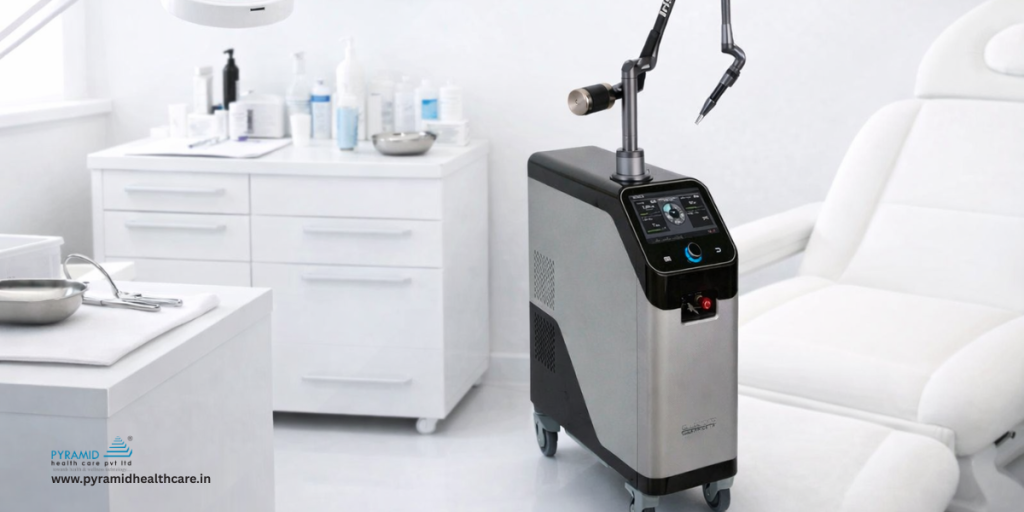
For clinics that want dependable performance without moving into the high-cost picosecond segment, the IRIS Tattoo Laser system from Pyramid Healthcare offers a well-balanced solution. It is designed with clinically relevant wavelengths suited for common Indian tattoo pigments and delivers stable energy output that supports consistent treatment results. The user interface is intuitive, which shortens staff training time and improves workflow efficiency. More importantly, the system is backed by structured clinical training and responsive local after-sales support—an essential factor for practices that cannot afford downtime. This makes it a strong choice for clinics aiming to expand tattoo removal services while maintaining a controlled Tattoo Laser Machine Price and achieving a steady return on investment.
8. Matching the Machine to Your Clinic Model
Your ideal technology depends on your business strategy:
- Startup aesthetic clinic: Q-switched system with multi-use capability
- Dermatology practice: High-energy Q-switched with multiple wavelengths
- Premium aesthetic centre: Picosecond for faster results and higher pricing
A higher initial Tattoo Laser Machine Price can be justified if your patient base supports premium treatments and faster turnaround.
Final Thoughts
Choosing the right Tattoo Laser Machine is not about finding the lowest price—it is about selecting a system that delivers reliable results, minimises downtime, and supports your clinic’s growth strategy.
Key decision factors to remember:
- Multiple wavelengths increase treatment versatility
- Q-switched is cost-effective and reliable for Indian skin types
- Picosecond offers faster clearance and premium positioning
- High energy and larger spot sizes improve efficiency
- Warranty and after-sales support determine real ownership cost
A well-informed purchase ensures better clinical outcomes, stronger patient retention, and sustainable profitability in India’s growing tattoo removal market.
Ready to add a high-performance Tattoo Laser Machine to your clinic? Get expert guidance, live demos, and transparent Tattoo Laser Machine Price options tailored to your budget and treatment goals. Speak with our team today and choose a system that delivers results, reliability, and real ROI.


 2025 All Rights Reserved, Pyramid Healthcare.