

Dermatologist’s Guide to Laser Treatment for Pigmentation: Top Laser for Pigmentation in 2026
Pigmentation issues—like dark spots, melasma, and uneven skin tone—can be frustrating. You try creams, home remedies, and endless skincare routines… yet those stubborn patches refuse to fade. That’s where modern laser technology steps in. In 2026, dermatologists are increasingly recommending Laser Treatment for Pigmentation as one of the most effective, science-backed solutions for clearer, brighter skin. But not all lasers are the same—and choosing the right Laser for Pigmentation can make all the difference.
Let’s break it down in a simple, practical way.
What Is Laser for Pigmentation?
A Laser for Pigmentation is a medical device that uses focused light energy to target excess melanin (the pigment responsible for dark spots) in the skin.
Instead of treating the surface like creams do, lasers go deeper and:
- Break down pigment clusters
- Stimulate skin renewal
- Improve overall skin tone
According to dermatology sources, laser energy specifically targets melanin deposits and breaks them into tiny particles, which are then naturally removed by the body (Pyramid Healthcare).
In short, it treats the root cause—not just the symptoms.
How Does Laser Treatment for Pigmentation Work?
Understanding how Laser Treatment for Pigmentation works makes it easier to trust the process.
Step-by-step process:
- Targeting Pigment
The laser emits light that is absorbed by dark pigment. - Breaking Down Melanin
The energy shatters pigment into microscopic particles. - Natural Removal
Your body gradually removes these particles over days or weeks. - Skin Regeneration
New, clearer skin replaces the treated area.
Modern lasers are highly precise, meaning they treat only the affected area without damaging surrounding skin (Pyramid Healthcare).
Types of Laser for Pigmentation in 2026
Dermatologists use different types of Laser for Pigmentation, depending on your skin type and condition:
1. Q-Switch Laser
- Best for: Melasma, sunspots, tattoos
- Works with high-intensity short pulses
- Minimal downtime
2. Pico Laser (Picosecond)
- Best for: Stubborn pigmentation
- Faster results than traditional lasers
- Less heat damage
3. Fractional CO2 Laser
- Best for: Deep pigmentation + skin texture
- Also improves scars and wrinkles
4. IPL (Intense Pulsed Light)
- Best for: Mild pigmentation
- Not technically a laser, but widely used
Eclipse – Advanced Laser Treatment for Pigmentation
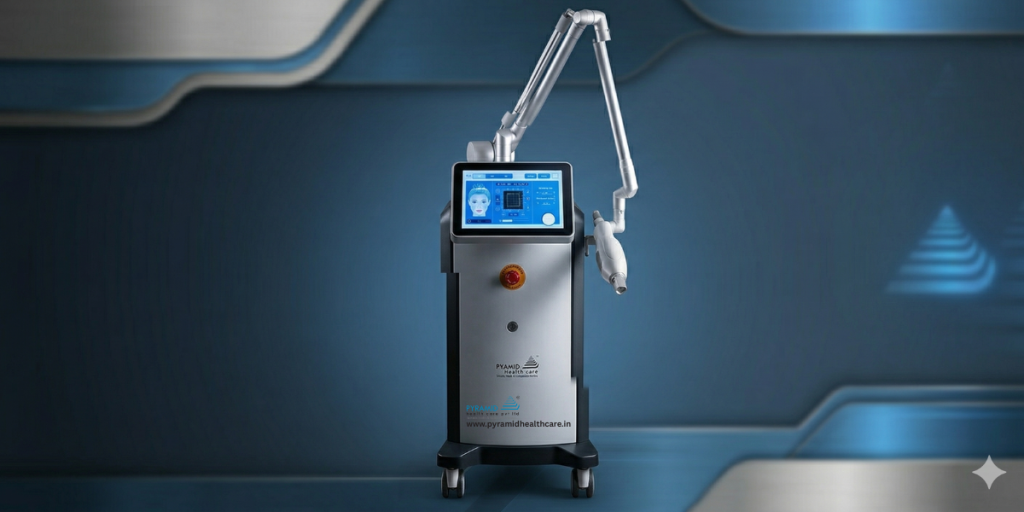
One of the most promising technologies in 2026 is the Eclipse laser system from Pyramid Healthcare.
What makes Eclipse different?
The Eclipse device is a Q-Switch-based Laser Treatment for Pigmentation designed for precision, safety, and versatility.
Key Features:
- Advanced beam technology for accurate targeting
- Smart cooling system for patient comfort
- Customizable settings for different skin types
- Optical tracking for even treatment coverage
These features allow dermatologists to treat pigmentation safely while reducing discomfort and improving results (Pyramid Healthcare).
What can Eclipse treat?
- Melasma
- Sunspots
- Acne scars
- Uneven skin tone
- Fine lines and wrinkles
It also uses non-ablative technology, meaning it stimulates skin repair without removing layers of skin—resulting in faster recovery and lower risk (Pyramid Healthcare).
That’s why many clinics are upgrading to systems like Eclipse for modern Laser Treatment for Pigmentation.
Comparison: Types of Laser for Pigmentation
Here’s a simple dermatologist-style comparison to help you understand your options:
| Feature | Q-Switch Laser (Eclipse) | Pico Laser | Fractional CO2 |
|---|---|---|---|
| Technology | Nanosecond pulses | Picosecond pulses | Ablative/fractional |
| Best For | Pigmentation, melasma | Stubborn pigment | Deep scars + texture |
| Downtime | Minimal | Very low | Moderate |
| Pain Level | Low | Very low | Medium |
| Safety for Indian Skin | High | Very high | Moderate |
| Sessions Needed | 4–6 | 3–5 | 2–4 |
| Cost | Moderate | High | High |
| Results | Gradual, natural | Faster | Dramatic |
Benefits of Laser Treatment for Pigmentation
Why are dermatologists recommending Laser Treatment for Pigmentation more than ever?
Key advantages:
- Targets deep pigmentation
- Long-lasting results
- Improves overall skin texture
- Non-invasive (no surgery)
- Minimal downtime
Modern aesthetic lasers are also customizable and precise, making them safer across different skin tones (Pyramid Healthcare).
Risks and Safety Considerations
While Laser for Pigmentation is generally safe, it’s important to know:
Possible side effects:
- Temporary redness
- Mild swelling
- Slight peeling
How to stay safe:
- Choose a qualified dermatologist
- Avoid sun exposure post-treatment
- Use SPF daily
- Follow aftercare instructions
Professional devices offer better safety controls and predictable results compared to at-home options (Pyramid Healthcare).
Who Should Choose What?
Not all pigmentation is the same. Here’s a simple guide:
Choose Q-Switch (like Eclipse) if:
- You have melasma or sunspots
- You want minimal downtime
- You have medium to darker skin
Get Pico Laser if:
- You have stubborn pigmentation
- You want faster results
- Budget is not a concern
Choose Fractional CO2 if:
- You have deep scars + pigmentation
- You want skin resurfacing
A dermatologist will always personalize your Laser Treatment for Pigmentation based on your skin type and goals.
Cost of Laser Treatment for Pigmentation in 2026
Costs vary depending on technology and clinic:
- Q-Switch (Eclipse): ₹2,000–₹6,000 per session
- Pico Laser: ₹5,000–₹12,000 per session
- Fractional CO2: ₹8,000–₹20,000 per session
Multiple sessions are usually needed for the best results.
FAQs About Laser for Pigmentation
1. Is Laser Treatment for Pigmentation permanent?
Results are long-lasting, but maintenance may be needed if triggers like sun exposure continue.
2. Is laser safe for Indian skin?
Yes—especially Q-Switch and Pico lasers, which are designed for darker skin tones.
3. How many sessions are required?
Typically 3–6 sessions, depending on the condition.
4. Does it hurt?
Most patients feel mild tingling or heat, but it’s generally tolerable.
5. When will I see results?
You may notice improvement in 2–3 weeks, with full results over multiple sessions.
Final Thoughts: Is Laser Treatment for Pigmentation Worth It?
If you’re tired of temporary fixes, Laser Treatment for Pigmentation offers a powerful, long-term solution. With advanced options like the Eclipse system, treatments today are safer, more precise, and more effective than ever.
The key is choosing the right Laser for Pigmentation—and more importantly, the right dermatologist.
Ready to Transform Your Skin?
Clear, even-toned skin is no longer out of reach. Consult a qualified dermatologist, explore advanced technologies like Eclipse, and take the first step toward confident, radiant skin.


 2025 All Rights Reserved, Pyramid Healthcare.