

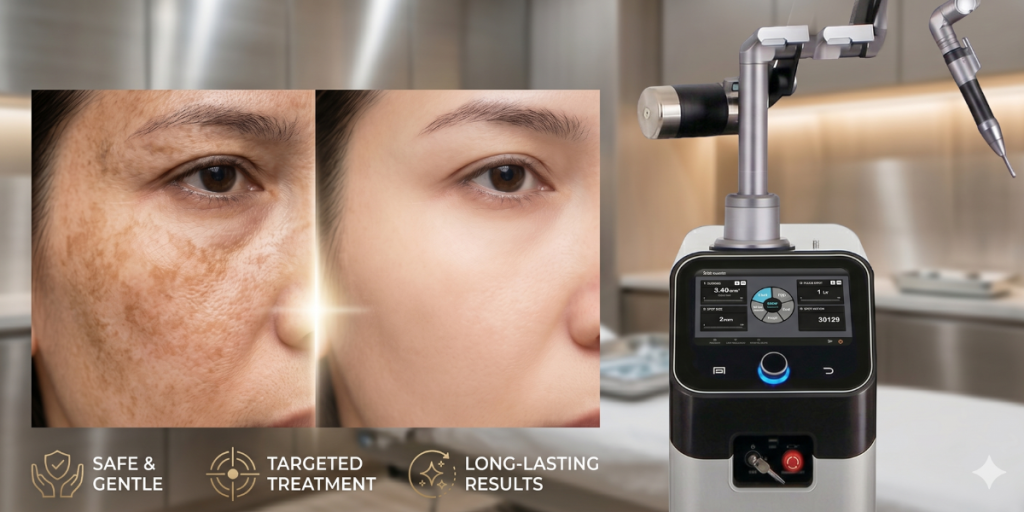
Which Laser for Melasma Actually Works in 2026?
Melasma is not just another pigmentation issue—it’s a chronic, relapsing skin condition that behaves differently from tanning or sunspots. That’s why many people feel frustrated after trying multiple creams, DIY remedies, or even treatments that promise “permanent removal.”
In 2026, laser treatment for melasma and laser therapy for melasma are among the most searched and recommended options.
But here’s the truth:
- Not all lasers work the same way
- Not all patients respond the same way
- And the wrong approach can actually worsen melasma
This guide breaks everything down in a clear, expert-backed way—so you can make an informed, safe, and result-driven decision.
Understanding Melasma: Why It’s So Difficult to Treat
Before choosing any laser for melasma, you need to understand what you’re dealing with.
Melasma is triggered by a combination of:
- UV and heat exposure
- Hormonal changes (pregnancy, birth control, thyroid issues)
- Genetic predisposition
- Skin inflammation
What makes melasma tricky is that it exists in different layers of the skin:
- Epidermal melasma (surface-level, easier to treat)
- Dermal melasma (deeper, more stubborn)
- Mixed type (most common)
This is why a “one-size-fits-all” laser treatment often fails.
What Is Laser Treatment for Melasma?
Laser treatment is a general term used for procedures where targeted light energy is used to break down excess melanin (pigment) in the skin.
Here’s how it works:
- The laser emits energy absorbed by the pigment
- This energy breaks pigment into smaller particles
- The body gradually clears these particles through natural processes
However, there’s a catch:
If too much heat is generated, it can stimulate melanocytes (pigment-producing cells)—leading to rebound pigmentation.
That’s why modern treatments are shifting toward safer, controlled methods.
What Is Laser Therapy for Melasma?
In 2026, laser therapy is considered a more advanced and strategic approach.
Instead of aggressive, high-energy sessions, laser therapy focuses on:
- Low-fluence (low energy) repeated sessions
- Gradual pigment reduction
- Combination with medical skincare and oral treatments
- Long-term maintenance
Think of it this way:
- Laser treatment aims for quick correction
- Laser therapy focuses on controlled, sustainable improvement
This shift is based on years of clinical evidence showing that slow and steady treatment reduces relapse risk.
Types of Laser for Melasma in 2026 (Explained in Detail)
Choosing the right laser is more important than choosing laser vs no laser.
1. Pico Laser (Picosecond Technology)
This is currently one of the most advanced options.
How it works:
- Uses ultra-short pulses (picoseconds)
- Breaks pigment mechanically rather than thermally (less heat)
Why it’s popular:
- Lower risk of skin damage
- Safer for Indian and darker skin tones
- Minimal downtime
Limitations:
- Requires multiple sessions
- Results are gradual, not instant
Best for: Early to moderate melasma, patients seeking safer long-term improvement
2. Q-Switched Laser (Low-Fluence / Laser Toning)
A well-established method is still widely used.
How it works:
- Delivers controlled energy to the target pigment
- Often used in “laser toning” mode (low energy, multiple sessions)
Advantages:
- Effective when used conservatively
- Widely available
Risks:
- Overuse or high settings can cause:
- Rebound pigmentation
- Skin sensitivity
Best for: Maintenance therapy or resistant cases under expert care
3. Fractional Laser (Non-Ablative / Ablative)
This laser targets both pigmentation and skin texture.
How it works:
- Creates micro-injuries in the skin
- Stimulates collagen and skin renewal
Pros:
- Improves overall skin quality
- Helps with acne scars + pigmentation
Cons:
- Generates more heat
- Not always suitable for melasma-prone skin
Best for: Selected cases where melasma is combined with texture concerns
Laser Treatment vs Laser Therapy: A Clear Comparison
| Factor | Laser Treatment for Melasma | Laser Therapy for Melasma |
|---|---|---|
| Approach | Aggressive / fast | Gradual / controlled |
| Energy Level | Moderate to high | Low-fluence |
| Sessions | Fewer | Multiple (6–12+) |
| Risk of Relapse | Higher | Lower |
| Skin Safety | Depends on technique | Generally safer |
| Results | Faster but unstable | Slower but sustainable |
Why Some Laser Treatments Fail?
Many patients say, “I tried laser, but my melasma came back worse.”
Here’s why that happens:
- Excessive heat triggers melanocytes
- Lack of sun protection after treatment
- No maintenance therapy
- Wrong laser type for skin tone
- Inexperienced practitioner
In 2026, success depends more on protocol and expertise than on the machine itself.
The 2026 Gold Standard: Combination Therapy
The biggest shift in melasma treatment is this:
Laser is no longer used alone.
Top dermatology clinics now combine:
- Laser therapy (Pico or Q-switched)
- Topical treatments (tranexamic acid, azelaic acid, retinoids)
- Oral medication (when needed, under supervision)
- Broad-spectrum sunscreen (SPF 50+)
- Heat and light protection strategies
This multi-layered approach:
- Targets pigment at different levels
- Reduces recurrence
- Improves overall skin health
Safety Considerations (Especially for Indian Skin)
Melanin-rich skin is more reactive to heat and inflammation.
So:
- Low-energy lasers are preferred
- Patch testing is essential
- Post-treatment care is non-negotiable
Avoid:
- High-energy, single-session promises
- Unqualified providers
- Extremely cheap packages
Cost of Laser for Melasma in 2026
In India, pricing varies based on technology and clinic expertise:
- Per sessione: ₹3,000 – ₹12,000
- Full plan (6–10 sessions): ₹25,000 – ₹80,000+
Higher cost often reflects:
- Better technology
- Safer protocols
- Experienced dermatologists
Who Is the Right Candidate?
You may benefit from laser therapy if:
- Melasma is persistent despite skincare
- You’re committed to long-term treatment
- You can follow strict sun protection
You should avoid or delay if:
- You’re pregnant
- You have active acne or skin irritation
- You cannot maintain aftercare
Final Verdict: Which Laser for Melasma Actually Works?
Here’s the most honest, experience-backed answer:
There is no “one best laser” for everyone
Pico lasers and low-fluence Q-switched lasers are safest in 2026
Laser therapy (gradual approach) is better than aggressive treatment
Combination care delivers the best long-term results
Melasma is not about quick removal—it’s about long-term control and stability.
Practical Takeaway
If you’re considering laser treatment for melasma:
- Focus on the treatment plan, not just the device
- Choose a provider who understands melasma deeply
- Commit to sunscreen and maintenance
- Be patient—real results take time
Because in 2026, the goal is not just clearer skin today—It’s keeping it clear tomorrow. Contact us for any queries or questions about the Laser Machine.


 2025 All Rights Reserved, Pyramid Healthcare.